
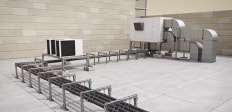
Productive, easily designed and cost efficient
Unexploited, vast available ground, ready for new constructions to be built on is a rare sight in todays modern city planning. More often than not, developers, architects and designers are forced to reach sky high in order to fit their desired square meters on to the often-small available ground that has been prepared either from demolishing existing buildings, or by re-planning parking spaces into housing or offices.
Building on the height on a limited space in a central location is not only challenging in terms of managing the actual construction work, operating crane jobs and casting concrete. It also comes along with “on the minute-planning” of deliveries, managing traffic and maybe the most critical part, managing available space for material and the work force.
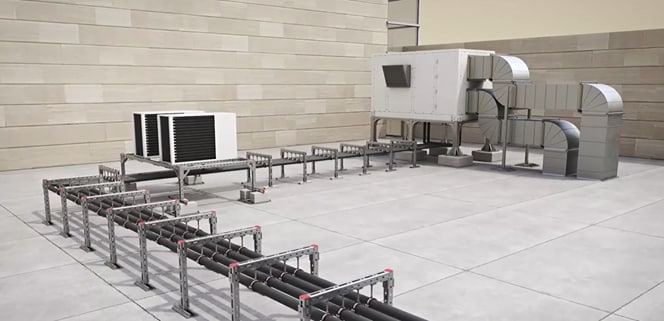
At Hilti, we strongly believe in good planning, early design work and lean deliverance. The often so time sensitive construction phase can be made more productive through early up-front design work, or by not negating crucial steps in the planning flow. You can find out more about Hilti’s BIM offering on Ask Hilti by viewing on of our webinars by following this LINK.
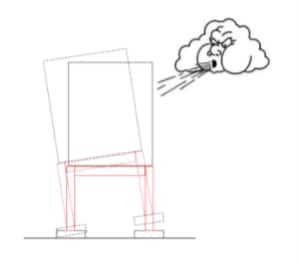
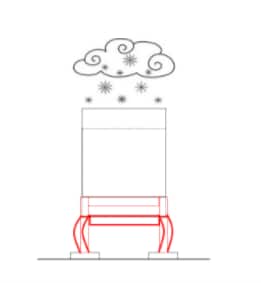
Even though a major part of the MEP-installations is to be found inside the shell of the construction, the roof top applications, supporting HVAC, drainage water and other important services are not to be forgotten. The different conditions that weather can bring during a year will test the supports to their limits, and sometimes unfortunately above as well. Temperature differences between summer and winter can bring unexpected thermal expansion to both pipes, ducts and structural steel, while strong wind can cause collapse in the structure, which potentially can lead to the whole systems breaking.
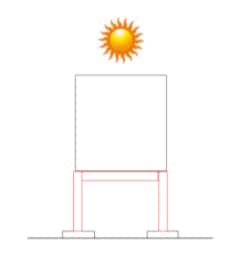
In order to prevent corrosion on the structures but keep the cost as low as possible, looking into the coating could be a good idea. While stainless steel is on the more expensive end, hot dipped galvanized material leaves a bigger CO2 footprint due to a more complex manufacturing process. Here, ZM, Zinc Magnesium could be an alternative. ZM coating is often cheaper to process and less sensitive to corrosion over time.
By designing those supports in an early stage and by bringing them into the BIM workflow, you will not only be able to monitor the cost of those supports, but also to bring them into the time planning, making crane scheduling and on-site delivery more tangible.
Another important aspect to keep in mind is the force that pipes, ducts and live loads due to environmental conditions brings to the actual roofing material. Flat or low sloping roofs often comprises of a multi-layer construction. Sharp edges, small area foot plates and unfavourable inclination in the supports can cause damage on the water proofing layer, inevitably leading to water damage over time.
This is also a strong reason to invest in an early design of the rooftop support system, and by doing so the modular supports can be perfectly fit to the roofing material and its performance.
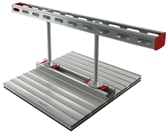
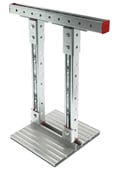
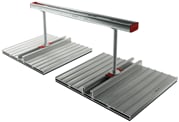
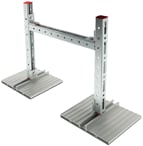
Hilti offers a complete portfolio of different solutions for rooftop supports alongside with our market leading products and design services for the MEP industry. Our latest innovation within installation systems, System-MT, which you can learn more about on our webpage makes design work and onsite installation even more easy. The fact that it is cheaper, lighter, stronger and faster to install than our previous systems are only a few benefits you will learn about once you start using it.
Are you interested in learning more about system MT or our other installation system design, you can find more information here.
You are also welcome to ask us for support: simply leave a comment or post your question in the community, or improve your knowledge and skills via our Webinars or training sessions.
For the latest news in engineering solutions and innovations follow us on: LinkedIn, Instagram and Twitter
This article is part of ongoing series dedicated to MEP topics. Find more here
